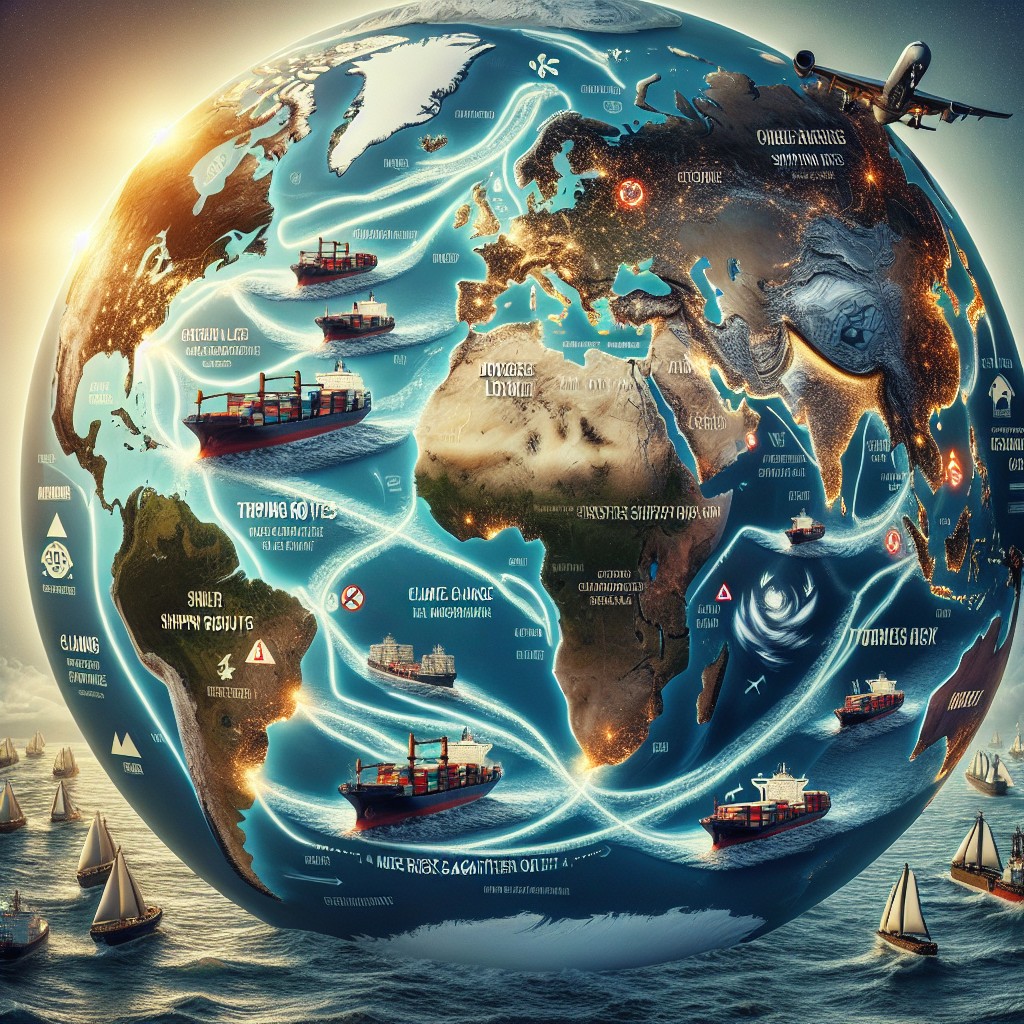
Global shipping routes are undergoing significant changes as they adapt to evolving risks posed by geopolitical conflicts, climate change, and economic shifts. These transformations are reshaping international trade patterns and prompting stakeholders to reconsider traditional maritime pathways.
Geopolitical Conflicts Reshape Maritime Pathways
The escalation of regional conflicts and tensions in strategic maritime areas has compelled shipping companies to alter established trade routes. Areas such as the South China Sea and parts of the Middle East have experienced increased military activity, leading to heightened security risks for commercial vessels. As a result, many operators are avoiding these sections, opting for longer, but safer alternative passages to guarantee cargo safety and compliance with international regulations.
Climate Change Influences Navigation and Port Accessibility
Climate change impacts, including rising sea levels and extreme weather events, are increasingly influencing shipping lanes. Melting Arctic ice has opened new northern passages during certain months, potentially reducing transit times between Asia and Europe. However, unpredictable ice conditions and environmental concerns limit their extensive use. Additionally, more frequent and intense storms along traditional routes have disrupted schedules and forced rerouting, contributing to increased fuel consumption and operational costs.
Economic Realignments Affect Trade Routes Choices
Changes in global economic centers and trade partnerships have also played a role in modifying maritime logistics. The rise of new manufacturing hubs in Southeast Asia and Africa, coupled with shifting trade agreements, has prompted the development of new trade routes. Shipping companies are aligning their services to connect emerging markets efficiently, facilitating better integration into global supply chains and responding to altered demand landscapes.
Technological Advances Improve Route Planning and Safety
Advancements in maritime technology are helping to address the challenges posed by the changing global trade environment. Enhanced satellite tracking, real-time weather data, and risk assessment tools allow for dynamic route optimization. This technology enables vessels to avoid hazards ranging from piracy hotspots to severe weather patterns, ensuring safer and more economical voyages. Additionally, developments in eco-friendly propulsion systems are influencing route planning by factoring in fuel efficiency and environmental regulations.
Environmental Regulations Impact Shipping Practices
International environmental policies, such as the International Maritime Organization’s sulfur emission limits, have affected how trade routes are managed. Compliance with stricter emission rules can dictate slower speeds or alternative routing to access cleaner fuel supplies. These rules incentivize shipping companies to reconsider their operational pathways to balance regulatory adherence with efficient logistics, contributing to the shift in global shipping route configurations.
In conclusion, the landscape of global maritime trade routes is dynamically evolving in response to a complex matrix of risks, environmental changes, and economic shifts. Stakeholders in international shipping must continue adapting their strategies to maintain secure, efficient, and compliant operations. This ongoing evolution suggests that the future of global trade will depend heavily on flexible and resilient route planning integrated with advanced technological tools.
Frequently Asked Questions about trade routes
How are geopolitical conflicts influencing current trade routes?
Geopolitical conflicts increase risks in certain maritime areas, causing shipping companies to alter traditional trade routes to avoid zones with heightened security concerns.
What role does climate change play in shaping trade routes?
Climate change affects trade routes by altering sea conditions, opening new passages like the Arctic route seasonally, and increasing weather-related disruptions, which influence navigation choices.
Can technological improvements enhance the safety of trade routes?
Yes, advances such as satellite tracking and real-time weather monitoring assist vessels in rerouting dynamically to avoid hazards, thus improving the safety and efficiency of trade routes.
How do environmental regulations affect shipping and trade routes?
Environmental regulations impose emission limits and operational standards that can necessitate slower speeds or alternative fuel supplies, influencing route planning and shipping practices.
Are economic changes causing the development of new trade routes?
Economic shifts, including emerging markets and trade agreements, lead to the creation of new trade routes designed to connect growth regions and optimize supply chains.